CoC · Call of Cthulhu RPG · Cthulhu
Call of Cthulhu
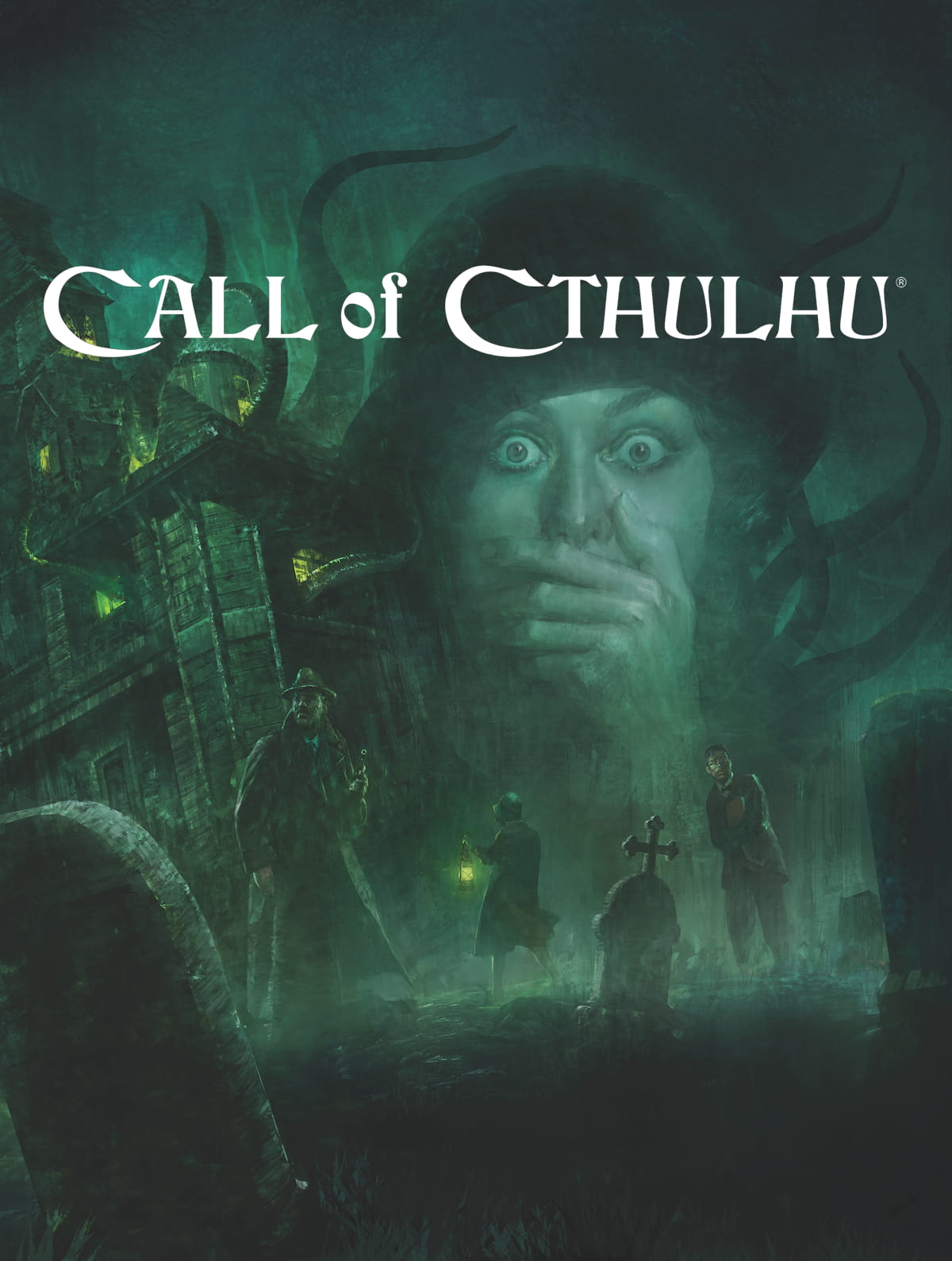
Call of Cthulhu is investigative horror in the Cthulhu Mythos. You play librarians, detectives and scholars who chase strange clues and face things people were not meant to know. Stories focus on creeping dread, smart choices and the price of curiosity. Death is possible, and so is losing your grip on reality. It is perfect if you want mystery with teeth, grounded characters and a slow burn. It sits squarely in cosmic horror, where knowledge is dangerous and victory often means surviving the night.
A session feels like a sharp detective story that turns unsettling. Your group interviews NPCs, sifts records, explores eerie sites and tests their nerve when the unknown appears. Tension rises through atmosphere and roleplay, not endless combat. It suits first-timers and veterans, small birthday groups and company teams who enjoy solving problems together. A professional Game Master sets the tone you want, from pulp-tinged action to bleak dread, and keeps things respectful for adult themes. Expect a cinematic, collaborative thriller you will talk about afterward.
How to play Call of Cthulhu
The core mechanic uses percentile dice. Each skill has a percentage. You roll two ten-sided dice to make a number from 1 to 100, and succeed by rolling equal to or under your skill. Harder tasks ask for better results. The Game Master calls for Sanity rolls when the unnatural intrudes. Success keeps you steady, failure costs composure, and choices get riskier. Combat is quick and dangerous, so investigation, planning and escape matter. You can push some failed rolls for another try at greater risk, and the GM may add bonus or penalty dice when the situation helps or hinders you.
Players bring curiosity, a character concept and a willingness to take notes and follow leads. A professional Game Master prepares locations, suspects, timelines and handouts, and runs NPCs with nuance. In a one-shot of about 3 to 4 hours, expect a tight mystery with clear stakes and a decisive end, often with high danger. Campaigns build slow-burn conspiracies, recurring allies and foes, and long-term consequences for body and mind. Your GM can tailor pacing, clue density and scare level to your group. Learn about different GM playstyles to match your taste.


Frequently asked questions
Do I need to know the rules to play Call of Cthulhu?
No. A professional Game Master will teach you the essentials in a few minutes and keep the table moving. You roll percentile dice, compare to your skills, and follow the clues. We can provide pre-generated investigators or help you build one quickly. If you have played D&D or other RPGs, the shift to investigation-forward play is easy. You bring curiosity and a willingness to take notes. The GM handles rules calls so you can focus on choices and atmosphere.
Which edition will we use, and can you run 6e or d20?
Most of our Game Masters run 7th Edition because it is clear, flexible, and supported by current scenarios. If you prefer 6th Edition or the d20 version, mention it in your request. Several GMs can run older editions or convert classic modules so you keep the original feel. You can browse available Game Masters and check which editions they list on their profiles here: find a Game Master.
How lethal is it, and how does Sanity work?
Call of Cthulhu is dangerous by design. Fights are fast and can be fatal, and the Sanity system tracks how exposure to the unnatural affects your mind. Losing Sanity changes how your investigator copes, and can lead to short-term or lasting conditions. It is not a gore-fest unless you ask for it. Your GM calibrates danger, offers ways to retreat, and helps you bring in a new character if needed, so tension stays high without derailing the fun.
How is Call of Cthulhu different from D&D?
In D&D you often solve problems by fighting, gaining levels, and collecting gear. In Call of Cthulhu you investigate, interview, research, and avoid direct confrontations when you can. Skills are percentages, not classes, and improvement is incremental. Magic is rare, risky, and often costs Sanity. Many scenarios finish without a boss fight. Success looks like stopping a ritual, saving a bystander, or making it out alive. The tone leans toward realism and dread over heroic fantasy.
What group size and session length work best?
It plays well with 3 to 5 players. Two gives you a tight, careful feel. Six is doable if everyone takes clear roles like face, researcher, and scout. A one-shot usually runs 3 to 4 hours, enough for a full mystery with a decisive end. Campaign sessions are similar in length, with threads that continue across episodes. Our Game Masters tune clue density, difficulty, and time pressure so the story fits your slot and attention.
Is it OK for teens, and how scary can you make it?
Content can include violence, distress, and occult themes, so it is not for children. Mature teens can play if the group agrees and a guardian approves. Before the game, your GM will check comfort levels and set lines and veils. We can emphasize suspense over gore, or keep it pulpier with fewer bleak outcomes. To match intensity and tone to your taste, browse GM playstyles and mention your preferences when booking.
Booking Form


Sent!

Nat 1, try again!
Please try again or email info@storyforgers.com
by Tessa Cosmic Horror
Reality tilts, secrets whisper, and your choices feel tiny beneath indifferent stars. Cosmic dread and investigative mystery, in the vein…
View genre: Cosmic HorrorMystery
Follow the clues, build timelines, and catch the culprit. Think Knives Out, but you are the detective, piecing together alibis and secrets…
View genre: Mysteryby Tristan the Lowly Wizard Gritty
Hard choices, scarce resources, and consequences that stick. Think Game of Thrones when trust is fragile, debts come due, and survival has…
View genre: Grittyby Elliot Gothic
Candlelit corridors, storm-lashed manors, secret letters, and forbidden desire. Gothic play blends romance, dread, and family curses, like…
View genre: Gothicby Tessa Psychological Horror
Tense, intimate horror where your mind is the maze. Think Shutter Island. Doubt your memories, question your allies, and feel dread build…
View genre: Psychological Horrorby Tessa Survival Horror
Nerve-tightening horror where every bullet, battery, and breath counts. Think The Last of Us, with tense scavenging, fragile hope, and…
View genre: Survival HorrorOccult
Candlelit rituals, cryptic symbols, and whispered conspiracies. Think The X-Files as you chase clues through secret lodges and hidden…
View genre: OccultConspiracy
Peel back layers of lies as you chase threads through shadowed rooms, coded files, and double-crosses. Paranoia builds with every clue…
View genre: ConspiracyHigh Fantasy
Vast kingdoms, ancient magic, and heroes on dangerous quests to save more than a town, maybe the world. Think The Lord of the Rings, where…
View genre: High Fantasy


Delta Green
Delta Green is modern-day cosmic horror and conspiracy. You play agents who face impossible threats, cover them up, and pay the personal cost. Think The X-Files with sharper teeth, where victories are fragile and sanity is on the line.
View system: Delta GreenArkham Horror: The Roleplaying Game
Face creeping dread and tangled conspiracies in Arkham, as investigators hunt clues, outwit cults and bargain with forces best left alone. Powered by narrative dice that turn every roll into story beats, it leans into tension and discovery. Fans of the Arkham Horror board game will feel right at home.
View system: Arkham Horror: The Roleplaying GameMothership
Mothership is sci-fi survival horror where you are spacers scrambling to stay alive as systems fail and something hunts you. Think Alien's tense corridors and hard choices. A professional Game Master guides 2 to 5 players through nail-biting one-shots or mini-campaigns.
View system: MothershipCandela Obscura
Enter a gaslit city of occult investigations and dangerous bargains. In Candela Obscura you are a sworn circle hunting breaches between our world and the uncanny. Think Penny Dreadful at the table, with tense mysteries, creeping dread, and hard choices.
View system: Candela ObscuraDread
Dread is a one-shot survival horror RPG that trades dice for a tumbling block tower. Each pull raises the stakes and your pulse. Think The Thing at your table, where fear, tough choices, and human flaws decide who makes it out.
View system: DreadWarhammer 40,000 Roleplay: Imperium Maledictum
Imperium Maledictum is Warhammer 40,000 roleplay built for grim investigation and hard choices. A percentile-based hunt through heresy, corruption, and cosmic horror, where your patron opens doors and adds pressure. Think Blade Runner's noir tension, scaled to a collapsing empire.
View system: Warhammer 40,000 Roleplay: Imperium MaledictumALIEN: The Roleplaying Game
Stalk the dark between the stars with ALIEN: The Roleplaying Game, a cinematic survival horror experience. Stress fuels panic and hard choices as you fight to survive. If Ridley Scott's Alien hooked you, this delivers that same cold-sweat dread at the table.
View system: ALIEN: The Roleplaying GameTen Candles
Ten Candles is a one‑shot, tragic horror story told in a room lit by candles. With each scene, another light goes out and the darkness closes in. Think The Mist, but everyone knows it ends badly, and that is what makes the journey gripping.
View system: Ten CandlesVampire: The Masquerade
Vampire: The Masquerade is modern-night roleplay about hunger, power and secrecy. Think Interview with the Vampire, but you make the calls. Scheme, seduce and survive as a coterie while a professional Game Master brings a city of dark politics to life.
View system: Vampire: The Masquerade